

· By Bedly
How to Sleep in a Hot Dorm Room: A Survival Guide for No-AC Buildings
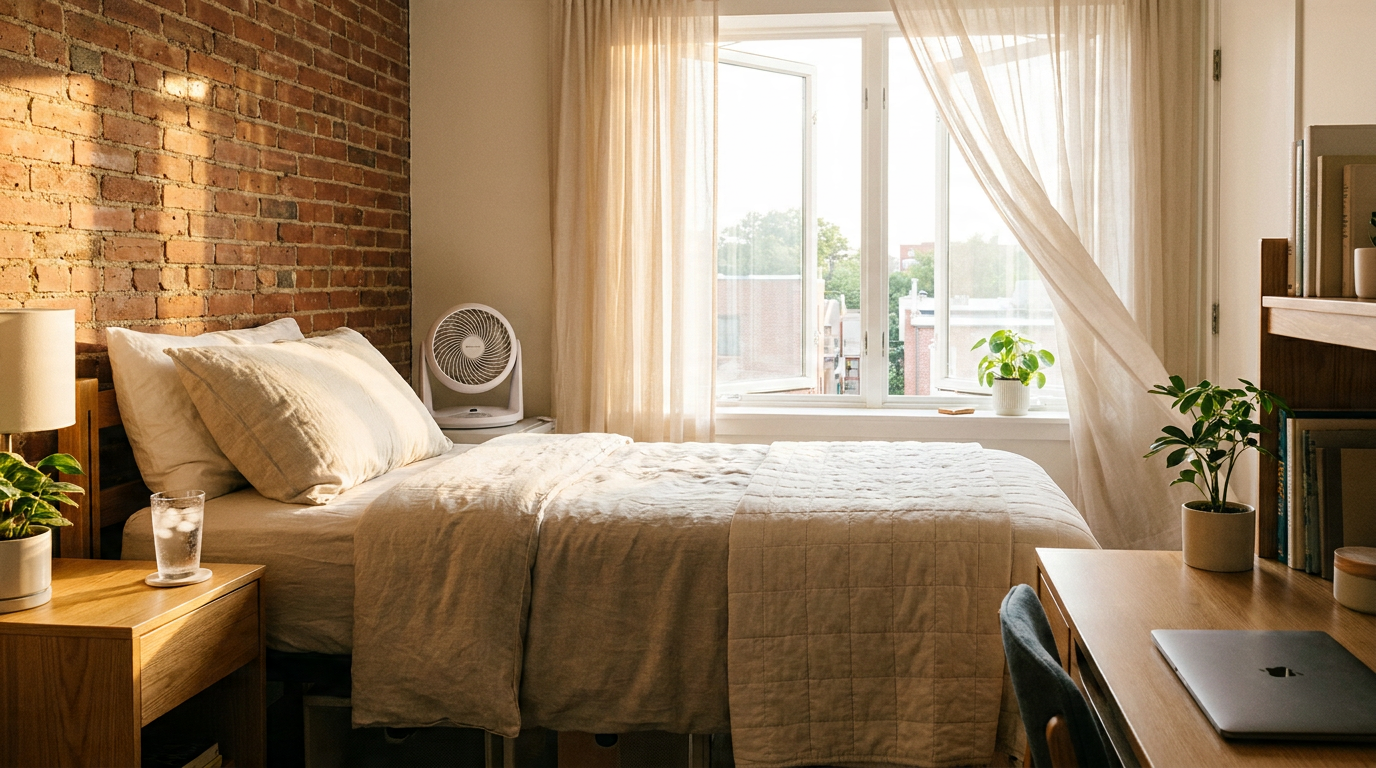
If your dorm room turns into a brick oven the second the sun goes down, you're not imagining it. A lot of college dorms—especially older ones—have no AC, thick walls, and a roommate who insists the window must stay shut. The result: you lie there sweating into your Twin XL sheets at 1 a.m., wondering if anyone has ever actually survived this.
You can. Here's how to sleep in a hot dorm room without spending hundreds on a window unit or moving out.
Why Dorm Rooms Get So Hot
Three things are working against you:
- The buildings. Most college dorms are old brick or concrete, which holds heat all day and leaks it back out all night.
- The bodies. You, your roommate, your laptop, your mini fridge, and a string of LED lights all generate heat in a 200-square-foot box.
- The bedding. Standard polyester dorm sheets and synthetic mattress toppers trap heat against your body.
You can't change the building. You can change almost everything else.
Cool Down the Room Before Bed
Run a fan—two if you can
One fan in the window blowing hot air out, one fan on you. This creates actual airflow instead of just blowing the same hot air around. A small tower fan and a clip-on bed fan is the classic dorm combo.
Close the blinds during the day
Yes, even when you're not there. Sunlight pouring through a south-facing window can heat the room by 10 degrees by 4 p.m. Blackout curtains help even more if your school allows them.
Unplug the heat sources
String lights, gaming consoles in standby, chargers, that one lamp you keep on for vibes—they all add up. Unplug what you're not using before you sleep.
Cool Down Your Bed
This is where most people lose the fight. Your sheets and topper are basically a hot pocket if they're synthetic.
Switch to breathable bedding
Polyester and microfiber feel soft in the store and miserable in July. Natural fibers like bamboo and cotton breathe better, wick moisture, and don't hold heat the same way. Our 100% Bamboo Viscose Twin XL Bed Set is built for exactly this problem—it's a soft, breathable upgrade made for dorm beds.
Stop your topper from sliding
If your mattress topper bunches up at night, you end up on the bare plastic dorm mattress—which is hot, sticky, and somehow even worse. Bedly Straps keep your topper and fitted sheet locked together so you're not wrestling with your bed at 3 a.m.
Try the cold compress trick
Freeze a damp washcloth, put it in a zip-top bag, and tuck it at the foot of your bed for the first 20 minutes. Or fill a hot water bottle with cold water and ice. Sounds ridiculous, works surprisingly well.
Cool Down Your Body
- Lukewarm shower before bed. Not cold—lukewarm. A cold shower makes your body warm itself up to compensate. Lukewarm helps your core temperature drop.
- Damp t-shirt method. Lightly mist a sleep shirt with water, put it on damp, and sit in front of the fan for a few minutes. Old-school, effective.
- Cool your wrists, neck, and feet. Hold a cold water bottle against your wrists for 30 seconds. These spots cool your blood fast.
- Drink water. Dehydration makes you feel hotter than you actually are. Keep a bottle by the bed.
Sleep Position Matters Too
Sprawl out. Don't ball up. Skin contact with bedding traps heat, so the more of your body that has airflow around it, the better. Push your sheet down to your waist if a top sheet feels like too much. Stick a leg out of the covers—it works for a reason.
And if your roommate runs a space heater… that's a separate conversation.
What to Skip
- Memory foam toppers in summer. They hold body heat. If you must have one, look for gel-infused or open-cell foam.
- Heavy comforters. Trade for a light cotton blanket or just a top sheet until it cools down.
- Closed windows to keep bugs out. Crack the window an inch and use a fan—it's almost always better than dead air.
- Hot meals right before bed. Late-night dining hall pasta sits in your stomach and raises your body temp. Eat earlier when you can.
FAQ
What's the best temperature for sleep in a dorm?
Most sleep experts point to somewhere in the 60s°F. That's almost impossible in a no-AC dorm in August, but it's a target. Anything you can do to bring the room down a few degrees helps.
Is a window AC unit worth it for a dorm?
Check your school's housing rules first—many dorms don't allow them. If they do and you can afford one, yes. If not, a tower fan plus a window fan can move a surprising amount of air for under $50.
Do cooling sheets actually work?
Breathable natural fibers like bamboo do help more than synthetics. They don't lower the room temperature, but they don't trap heat against you, which is half the battle.
How can I stop sweating in my dorm bed?
Switch to breathable bedding, wear light moisture-wicking pajamas, and keep airflow on your body. A bedside fan aimed at your torso makes a real difference.
Why is my dorm room hotter than the outside?
Brick and concrete buildings absorb heat all day and release it overnight. Combined with electronics, multiple people, and poor ventilation, the room can feel warmer than the outdoors well past midnight.
Dorm Sleep Takeaway
A hot dorm room is a stack of small problems—building, bedding, body heat, airflow. Fix three or four of them at once and the room becomes survivable. Start with a fan and breathable sheets, keep your bed setup from sliding around, and don't underestimate the lukewarm shower. You'll sleep through the night instead of just watching the ceiling fan spin.