

· By Bedly
The Most Sleep-Deprived College Athletes, Ranked by Sport
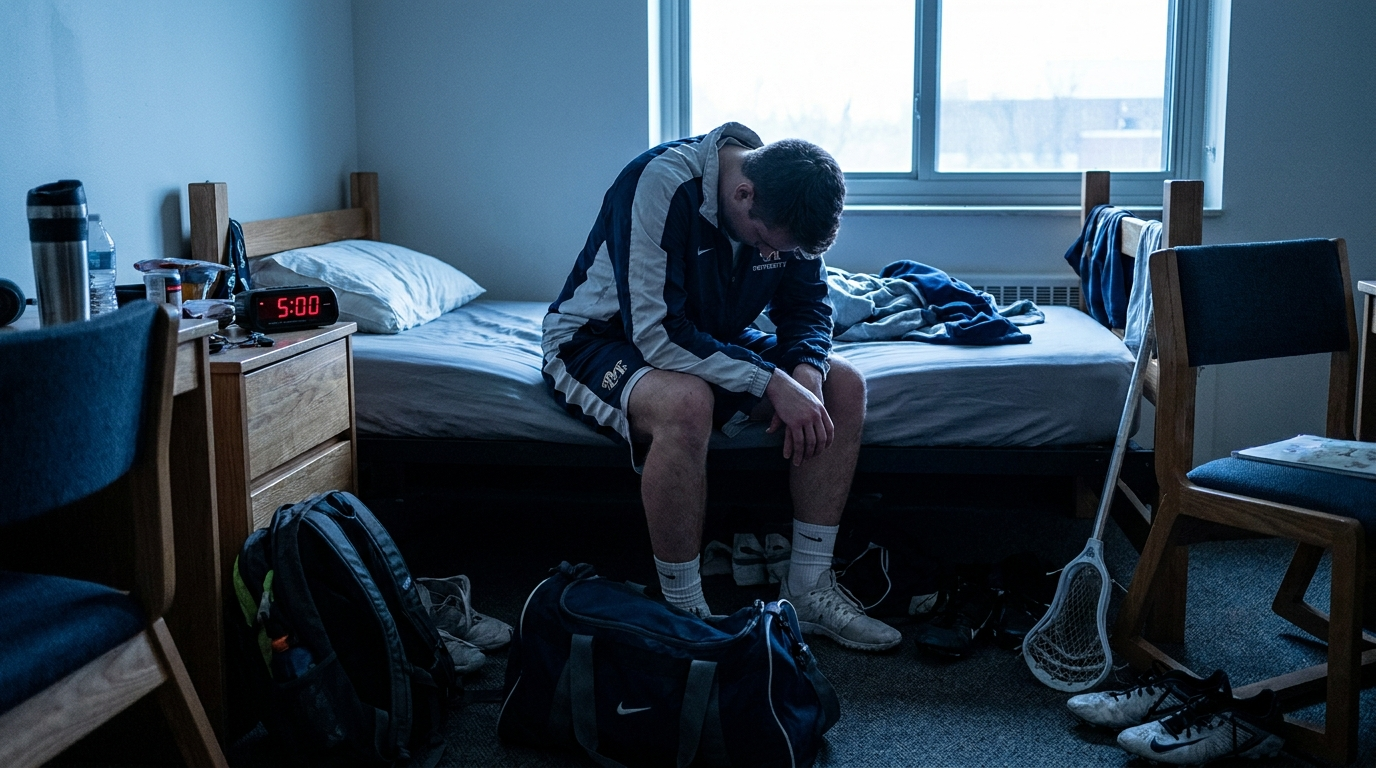
College is hard. College sports are harder. And sleep? For most student-athletes, sleep is something that happens between practice, class, film sessions, and away games—usually in the back of a van.
Student-athletes face a unique kind of exhaustion: physical fatigue from training stacked on top of academic pressure stacked on top of a schedule nobody in their right mind would agree to voluntarily.
Some sports are harder on sleep than others. Here's how the major college sports stack up—ranked from tough to genuinely brutal—based on training demands, travel schedules, and the sleep reality most student-athletes deal with.
1. Swimming & Water Polo 🏊
🌊 Why It's So Brutal:
Swimming programs are famous for one thing: morning practices at 5 AM—or earlier. That means waking up at 4:30 AM, getting to the pool before most of campus has gone to bed, and training for 2+ hours before your first class. Then doing it again in the afternoon.
😴 How It Wrecks Sleep:
- Forced sleep cutoff before natural sleep cycle completes
- Two-a-day training means no real recovery window during the day
- Heavy physical exertion makes the body fight to stay alert during class hours
Sleep Destruction Level: 🔥🔥🔥🔥🔥 (Extremely High)
Average Sleep Per Night: 4–6 hours
Pro Tip: Swimmers who manage this best treat sleep like a training requirement—in bed by 9 PM, no exceptions during the season. The ones who don't burn out fast.
2. Football 🏈
🏟️ Why It's So Brutal:
Football season is basically a second job. Between fall camp, morning weights, afternoon practice, mandatory film sessions, travel for away games, and weekly game preparation—the schedule has almost no slack. And that's before opening a textbook.
😴 How It Wrecks Sleep:
- Late-night film sessions after evening practice
- Away game travel means arriving back to campus past midnight
- Physical size and muscle mass make it harder to sleep comfortably on dorm beds
Sleep Destruction Level: 🔥🔥🔥🔥🔥 (Extremely High)
Average Sleep Per Night: 5–6 hours during season
Pro Tip: Football players often have the biggest frames in the dorm—and the worst bed setups to match. A mattress topper helps, but only if it doesn't slide. Bedly Straps lock everything in place so the few hours they do get aren't interrupted by shifting bedding.
3. Rowing / Crew 🚣
🌅 Why It's So Brutal:
Crew practices start on the water before dawn—often 5:30 AM or earlier. The athletic commitment is massive, the public profile is low, and the combination of cold water, heavy cardio, and pre-dawn mornings creates a level of fatigue that's hard to describe to anyone who hasn't lived it.
😴 How It Wrecks Sleep:
- Pre-dawn practices force earlier bedtimes than any social life allows
- Weekend regatta travel eats into the only sleep recovery window
- Full-body exertion makes recovery naps feel mandatory but rarely long enough
Sleep Destruction Level: 🔥🔥🔥🔥🔥 (Extremely High)
Average Sleep Per Night: 5–6 hours
Pro Tip: Strategic napping between classes is how most crew athletes stay functional. 20–30 minutes is the sweet spot—long enough to help, short enough not to wreck nighttime sleep.
4. Basketball 🏀
🏆 Why It's So Brutal:
College basketball schedules are relentless. Games frequently tip off at 8 or 9 PM, meaning players don't leave the arena until 11 PM or later. Add travel for away games, post-game film review, and an early morning weights session the next day, and sleep windows get extremely narrow.
😴 How It Wrecks Sleep:
- Late game times push post-game adrenaline deep into the night
- Hotel beds on away trips are inconsistent and unfamiliar
- Long season (November through March) with no real break
Sleep Destruction Level: 🔥🔥🔥🔥 (Very High)
Average Sleep Per Night: 5–7 hours during season
Pro Tip: Basketball players deal with the post-competition adrenaline problem more than most. A consistent wind-down routine after games—even a short one—helps signal to the body it's time to shift from competition mode to rest mode.
5. Wrestling ⚡
🥊 Why It's So Brutal:
Wrestling is unique because athletes are managing not just training load—but weight cutting. Restricting calories and water to make a weight class fundamentally disrupts sleep quality, mood, and recovery in ways that compound well beyond just hours logged.
😴 How It Wrecks Sleep:
- Caloric restriction makes it harder to fall and stay asleep
- Dehydration during cuts causes restless, low-quality sleep
- Physical intensity on top of nutritional stress creates compounding fatigue
Sleep Destruction Level: 🔥🔥🔥🔥🔥 (Extremely High)
Average Sleep Per Night: 5–6 hours during season
Pro Tip: The wrestlers who manage this best treat weight management as a season-long project, not a crisis every competition week. More consistent nutrition = more consistent sleep.
6. Baseball & Softball ⚾🥎
⚾ Why It's So Brutal:
Baseball and softball have some of the longest seasons in college sports—50+ games across spring semester. The travel alone is punishing: weekend series mean three-game road trips, arriving back Sunday night in time for Monday class.
😴 How It Wrecks Sleep:
- Weekend travel eats into the one time most students catch up on sleep
- Long game durations (3+ hours) combined with late start times
- Season spans the entire academic calendar with no off weeks
Sleep Destruction Level: 🔥🔥🔥🔥 (Very High)
Average Sleep Per Night: 5–7 hours during season
Pro Tip: Baseball and softball athletes sleep better during the season when their in-dorm sleep is as protected as possible. Making the dorm bed genuinely comfortable is worth more than it sounds when you're coming back from a midnight bus ride.
The One Thing Every Student-Athlete Can Control: Their Dorm Sleep Setup
You can't change your practice schedule. You can't control when games tip off or when the bus gets back to campus. But you can control what your bed actually feels like when you finally get into it.
Most dorm mattresses weren't designed for athletic recovery. A sliding mattress topper and a popped-off fitted sheet at 3 AM isn't just annoying—it's interrupting the recovery your body needs to perform tomorrow.
🔒 Bedly Straps lock your mattress topper and fitted sheet in place so you're not waking up mid-recovery to fix your bed. For athletes who only have 5–6 hours to work with, uninterrupted sleep matters.
🌿 And if you're sleeping hot after training, the Bedly 100% Bamboo Viscose Twin XL Bed Set is soft, breathable, and won't trap heat the way heavy cotton bedding does after a hard workout.
✨ Made for Twin XL dorm beds
✨ Keeps your setup locked in all night
✨ Takes less than 60 seconds to set up
🚀 Use code SLEEPWELL at checkout for an exclusive discount.
Conclusion: You Train Hard. Sleep Should Work With You, Not Against You.
Every sport on this list demands something different from athletes. But they all share one thing: sleep is one of the most critical factors in performance and recovery—and it's the one resource that's consistently under attack from the college athletics schedule.
✅ Know your sport's specific sleep challenges
✅ Protect your sleep window with the same intensity you protect practice time
✅ Make your dorm bed the one place that actually supports your recovery
Your competition doesn't care how tired you are. Sleep like your season depends on it—because it does. 😴🏆