

· By Bedly
How to Deal With Dorm Noise at Night (Without Going Insane)
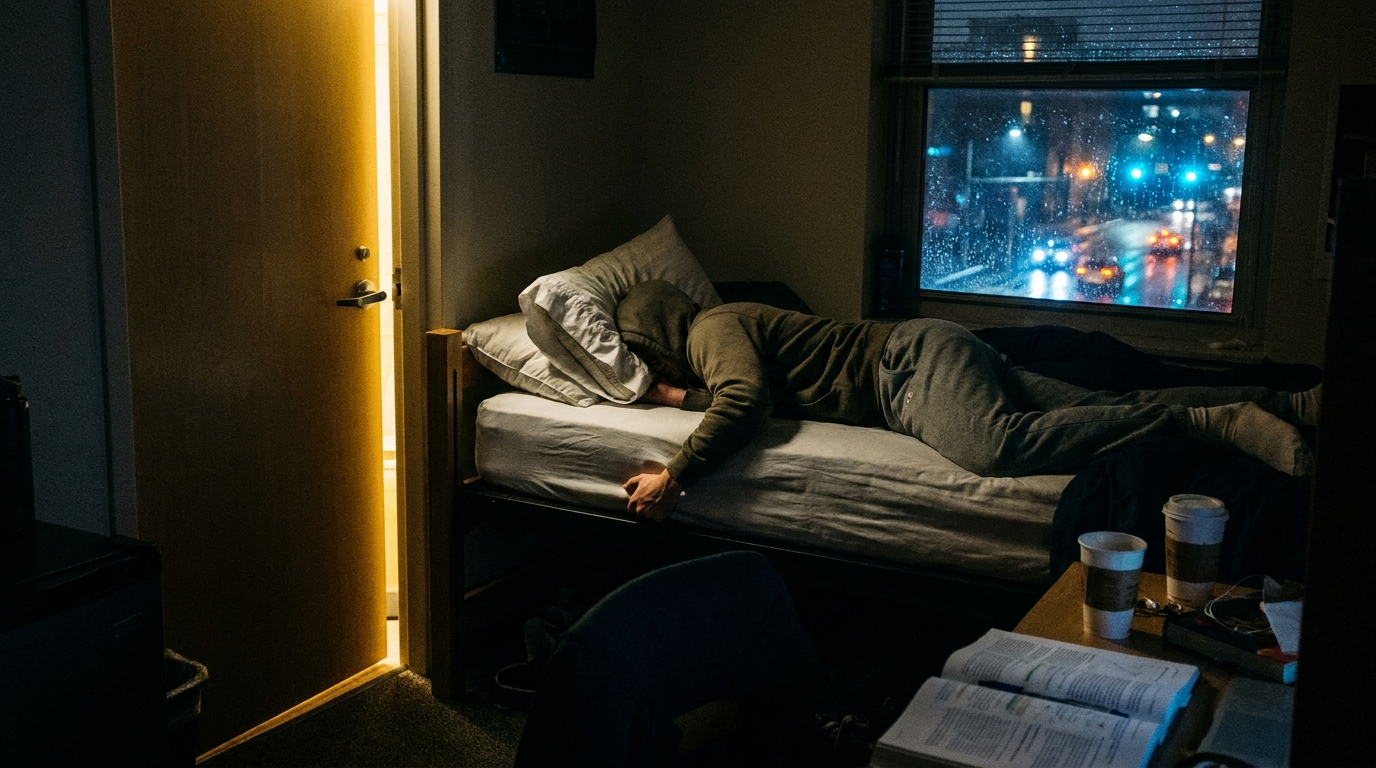
You're exhausted. It's midnight. And someone in the hallway is apparently having the most important conversation of their life — at full volume — directly outside your door.
Welcome to dorm life.
Noise is one of the most common and most frustrating dorm sleep problems. The solution isn't just "get earplugs" (though that helps). It's understanding what kind of noise you're dealing with and having a few strategies that actually work.
Why Dorm Noise Hits Different
In most living situations, you have some control over your sound environment. In a dorm, you have almost none. You can't soundproof the walls. You can't control your roommate's schedule. You can't stop the HVAC system from rattling. You can't prevent the person next door from getting back from their Thursday night at 2 AM.
The catch is that it's not just the noise itself — it's the unpredictability. A consistent background sound (like a fan or traffic hum) is much easier to sleep through than random, unexpected bursts of noise. Your brain processes sudden sounds as potential threats, which is why a door slamming can jolt you awake from a deep sleep while a constant hum barely registers.
That distinction matters for how you deal with it.
Step 1: Identify the Type of Noise You're Fighting
Hallway noise and door slammers
This is the most common dorm noise problem. Foot traffic, loud conversations, doors closing at all hours of the night.
The best defenses: a white noise machine or a box fan. Both create a consistent sound layer that helps mask unpredictable peaks. You're not eliminating the noise — you're smoothing out the contrast between silence and sudden sound so it stops snapping you awake.
Roommate noise
This one requires an actual conversation. If your roommate keeps different hours, you need to establish expectations early — ideally during the first week of school, before habits set in.
Most universities have roommate agreements. Use them. They're not there just to satisfy an RA — they're a low-stakes way to put expectations in writing so there's no ambiguity later. Topics worth covering: lights out, guests, alarm times, study hours, and what "quiet" actually means to each of you.
Building noise and environmental sounds
HVAC systems, elevators, plumbing, street traffic, early morning delivery trucks — this is background noise you can't negotiate with or control. White noise, earplugs, and consistent sleep habits (which make you a heavier sleeper overall) are your primary tools here.
What Actually Works
Here's a practical toolkit, roughly in order of impact:
- White noise machine or app: Consistent background sound is genuinely effective at masking unpredictable noise. A dedicated white noise machine is better than a phone app because it doesn't require your phone to stay on all night. But an app is a solid free starting point.
- Earplugs: Foam earplugs are cheap and work well. The main complaints are comfort and the "head pressure" sensation. Try a few different styles — some people do better with wax or silicone than foam.
- Noise-canceling earbuds or headphones: The premium option. Good for light sleepers who find earplugs uncomfortable. Not ideal if you need to hear your alarm.
- A box fan: Dual purpose — white noise and airflow. Especially useful in dorms without air conditioning.
- A sleep mask: Not a noise solution directly, but cutting out light helps you sleep more deeply overall, which means you're less easily woken by sound.
What Doesn't Work (That People Try Anyway)
- Sleeping with music or TV on: Random variations in volume and content keep your brain partially engaged. This is different from consistent white noise, which fades into the background.
- Hoping things will calm down: Dorm buildings don't get quieter on their own. If something is a recurring problem, it needs a recurring solution.
- Passive-aggressively posting noise complaints on a shared message board: Cathartic. Completely ineffective. Talk to your RA if it's a building-wide issue.
Your Bed Setup Matters More Than You'd Think
Noise disrupts light sleep much more than deep sleep. Anything that helps you sleep more soundly — including how comfortable your actual sleep surface is — makes you less likely to be jolted awake by hallway chaos.
If you're on a dorm mattress with a topper that slides around, you're waking up multiple times a night to readjust before the noise even becomes a factor. Bedly Straps keep your mattress topper and fitted sheet locked in place so your physical sleep surface isn't working against you.
Breathable bedding helps too — if you're sleeping hot and restless, every little sound is more likely to wake you. The Bedly 100% Bamboo Viscose Twin XL Bed Set is designed for dorm beds and breathes well enough that temperature isn't adding to an already disruptive environment.
When to Talk to Your RA
If the noise is chronic and coming from a specific source — a neighbor, a suite, a common area — it's worth a conversation with your RA. That's part of what they're there for.
Keep it factual and specific. "The guys in 304 are loud almost every night past midnight" is more useful than "the whole floor is noisy." RA conversations go better when they can actually identify and address a source.
If you're consistently losing sleep and it's affecting your academic performance, escalate. Most schools have processes for room reassignments in extreme cases, though that's typically a last resort after other options are exhausted.
FAQ: Dealing With Dorm Noise
Does a white noise machine actually help with dorm noise?
Yes — particularly for masking sudden, unpredictable sounds like doors slamming or hallway conversations. It doesn't silence the noise, but it reduces the contrast between quiet and loud, which is what tends to wake people up.
What's the best white noise sound for sleeping in a dorm?
Brown noise or pink noise tends to work better than pure white noise for most people — it's lower-pitched and less harsh. Fan sounds are another popular option. Try a few and see what your brain likes best.
How do I talk to my roommate about being too loud at night?
Early and directly — before resentment builds. Keep it collaborative: "I sleep pretty lightly and I've been having a hard time when you come in late — can we figure something out?" Most people respond better to that framing than to anything that sounds like an accusation.
Can I request a room change because of noise?
Usually yes, though policies vary by school. Most require you to document the issue and attempt resolution first. If the noise is persistent and documented, requests are more likely to be approved.
Is it normal to have trouble sleeping in a dorm?
Very. It's a shared environment with no natural quiet hours, multiple schedules coexisting in one building, and very little acoustic insulation. It's not a personal failing — it's just a genuinely difficult sleep environment that takes some adjusting to.
Dorm Sleep Takeaway
You can't control the noise in a dorm building, but you can control how you respond to it. A white noise machine, a practical conversation with your roommate, and a bed setup that isn't working against you will take you further than wishing the hallway would quiet down.
The dorm experience is loud. Your sleep doesn't have to suffer for it.