

· By Bedly
How to Organize a Small Dorm Room So You Actually Sleep Well
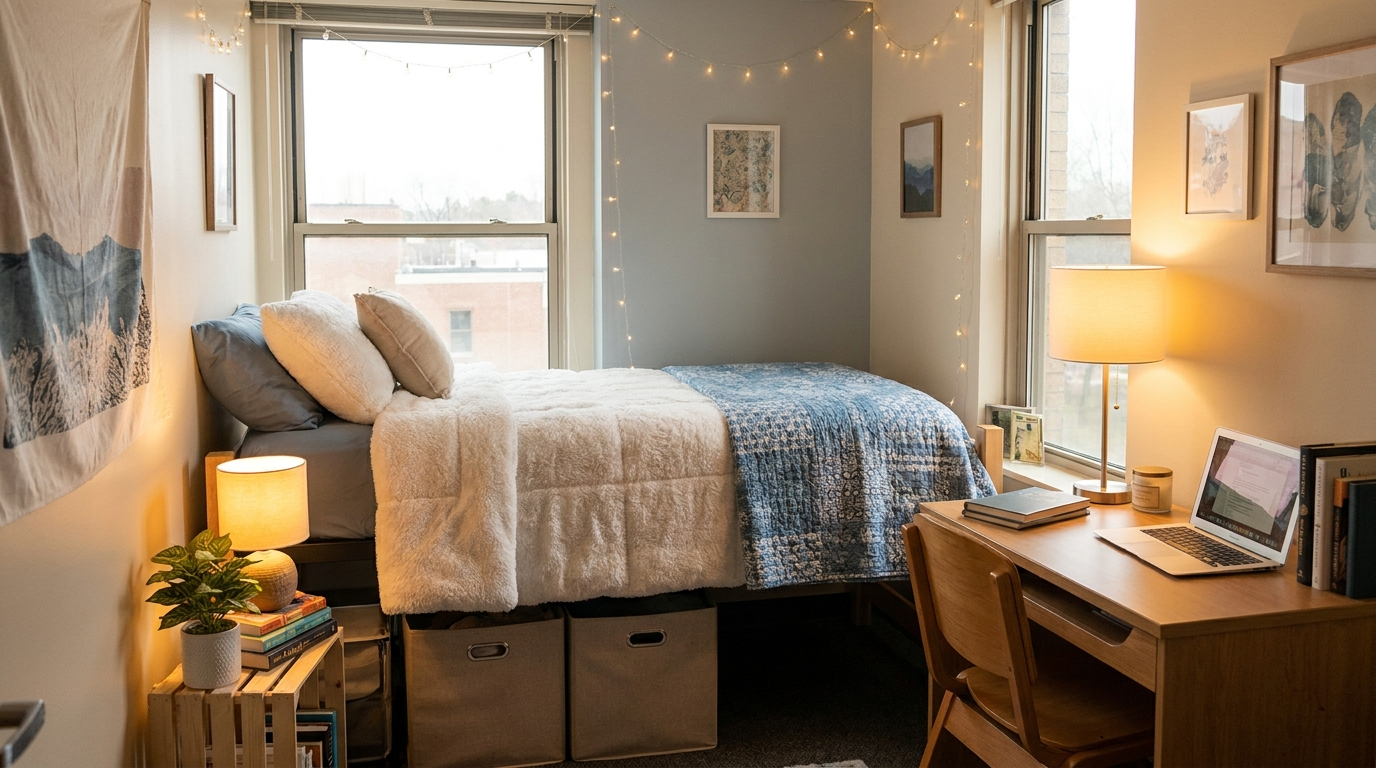
Here's a dorm room truth nobody tells you at orientation: a messy, chaotic room doesn't just look bad — it makes it harder to sleep.
That's not a wellness lecture. It's just how brains work. When your space is a disaster zone of laundry, textbooks, snacks, and three charging cables you can't identify, your brain has a harder time switching off when you actually want to sleep.
The good news? You don't need a bigger room. You just need a smarter setup. Here's how to organize a small dorm room so sleep is actually possible.
Why Dorm Rooms Make Sleep Hard by Default
The average dorm room is somewhere between 120 and 200 square feet — and that's often shared with another person. Your bed, desk, wardrobe, and life are crammed into the same space. There's no separation between where you work, where you eat, and where you sleep.
Your brain is wired to associate places with activities. If you do everything in one room — and especially on or near your bed — it starts to blur the line between "work mode" and "sleep mode." That makes it harder to wind down, even when you're exhausted.
Organizing your space — even minimally — creates mental cues that help your brain shift gears when it's time to rest.
Step 1: Define Your Sleep Zone
This is the most important thing you can do in a dorm room. Your bed should feel like a sleep space, not a general-purpose surface.
Keep the bed for sleeping (and sleeping only)
This one's harder than it sounds. Eating lunch on your bed, doing homework on your bed, watching lectures on your bed — it all trains your brain to see the bed as just another part of the room rather than a place for rest.
Set a rule: homework at the desk, food at the desk, phone scrolling somewhere other than your mattress. It takes a few weeks to stick, but it makes a difference.
Keep the wall above your bed calm
The space directly above your bed matters more than you'd think. Keep it calm — soft lighting, a photo or two, nothing that stresses you out. This is not the place for your exam schedule or a running to-do list.
Step 2: Tackle the Clutter (Without Becoming a Minimalist)
You don't need to get rid of your stuff. You just need to give your stuff a home.
Go through your room and sort everything into three buckets:
- Things you use daily — keep accessible but put away (desk drawer, shelf, small bin)
- Things you use weekly — store under the bed or in the closet
- Things you rarely use — seriously consider whether they need to be in the dorm at all
Under-bed storage is criminally underused. Flat bins that slide under a lofted or raised bed can hold a surprising amount: extra bedding, out-of-season clothes, bags, extra supplies. Get the visual clutter off the floor and out of your line of sight before bed.
Step 3: Think About Lighting
Overhead dorm lighting is harsh, unflattering, and specifically designed to keep you awake. If your room only has the fluorescent ceiling fixture, you're starting with a disadvantage.
Add a secondary light source near your bed. A small lamp, warm-toned LED strips, or even a clip-on book light gives you something to switch to when you're winding down. Harsh overhead light right before bed makes it harder for your brain to get the memo that sleep is coming.
Also worth considering: blackout curtains or a sleep mask. Dorm windows can let in a lot of ambient light — streetlights, signs, early morning sun — and that disrupts sleep quality even when you don't fully wake up.
Step 4: Lock In Your Bed Setup
One underrated source of dorm sleep frustration is a bed that won't stay together. Mattress toppers that slide to the foot of the bed by 3 AM. Fitted sheets that pop off a corner and bunch up underneath you. It sounds minor until it's waking you up at 2 AM and you're trying to remake your bed half-asleep.
Bedly Straps are designed exactly for this. They secure your mattress topper and fitted sheet together so the whole setup stays in place through the night — no more midnight bed wrestling. A simple fix that makes your sleep surface feel much more stable.
While you're at it: invest in bedding that actually feels comfortable. If your sheets are scratchy or trap heat, you'll sleep lighter. The Bedly 100% Bamboo Viscose Twin XL Bed Set is soft, breathable, and sized for dorm beds — which matters more than it sounds when a standard twin won't quite fit.
Step 5: Give Your Desk a Clear Purpose
Your desk is your work zone. The cleaner it is, the better — because a cluttered desk feels like there's always more to do, which bleeds into your headspace when you try to sleep.
Keep the surface clear of anything unrelated to your current work. Get a small organizer for pens and supplies. Put your laptop away — or at least close it — when you're done for the night.
This sounds like productivity advice, but it's also sleep advice. A desk that looks like a disaster at 11 PM is a visual reminder of everything you haven't done. A clear desk feels like a natural stopping point.
Step 6: Build a Wind-Down Routine That Uses Your Space
Even five minutes of consistent wind-down behavior signals to your brain that sleep is coming. The key is to make it spatial — not just behavioral.
Example routine:
- Put your phone on your desk or across the room (away from your bed)
- Switch from overhead light to your softer lamp
- Change into whatever you sleep in
- Get into bed — and stay there
The physical act of moving through your space in a predictable order tells your nervous system this is the sequence that ends in sleep. Simple, but it compounds over time.
FAQ: Dorm Room Organization and Sleep
Does a messy room actually affect sleep quality?
It can — mostly through stress and mental activation. Clutter is a visual reminder of incomplete tasks, which can keep your brain in a more alert state when you're trying to wind down. A tidier space tends to feel more mentally restful, even if the effect is subtle.
How do I organize a dorm room I share with a roommate?
Start with your side. You can't control your roommate's habits, but you can define your own sleep zone clearly. Have a direct conversation about sleep schedules early in the year — most roommate conflicts get worse when they're left unaddressed.
What's the best storage solution for a small dorm room?
Under-bed storage bins offer the highest return on investment. Pair them with bed risers if you need more clearance, and you've added a second closet's worth of storage without taking up any floor space.
Does making your bed in the morning actually help you sleep at night?
For many people, yes. A made bed is a visual signal that the bed is for sleeping, not living. It also means you're getting into a tidy space at the end of the day rather than a tangled mess — a better sensory experience even if it sounds minor.
Do I need blackout curtains in a dorm?
Depends on your window. If your dorm gets direct morning sunlight or faces a lit street, blackout curtains or a sleep mask can make a real difference. Light disrupts sleep continuity even without fully waking you up.
Dorm Sleep Takeaway
You're not going to turn a 150-square-foot shared room into a sleep sanctuary. But you can make smart small changes that add up: a defined sleep zone, intentional lighting, a locked-in bed setup, and enough visual order that your brain isn't stuck processing the mess when you close your eyes.
It's not about perfection. It's about removing as many obstacles to sleep as a dorm room allows.