

· By Bedly
How to Actually Sleep the Night Before a Final (Without Staring at the Ceiling)
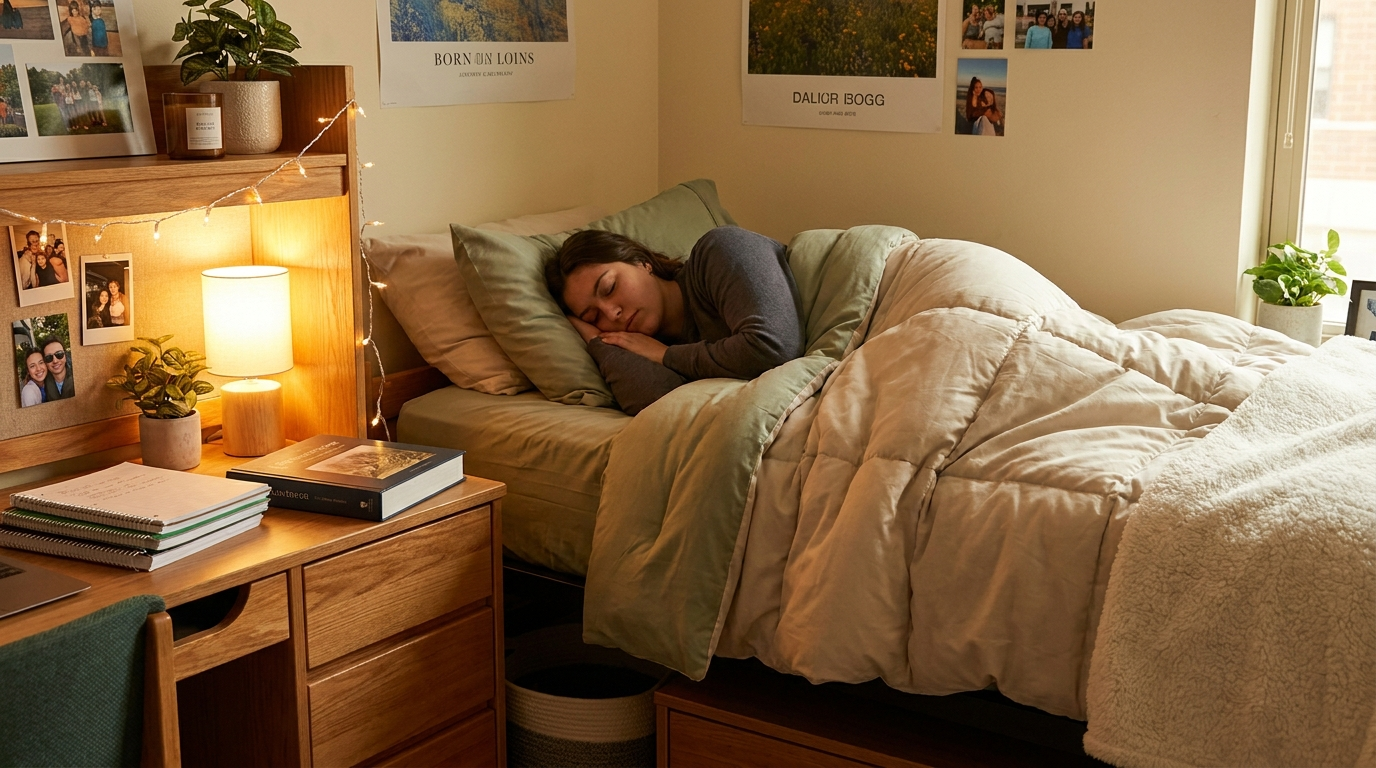
Why Sleeping Before a Final Is So Hard
You've studied. You've reviewed the notes. You've highlighted the highlights. You finally close your laptop and try to sleep — and then your brain decides it's the perfect time to run through every possible thing that could go wrong tomorrow.
Sleeping before a big exam is genuinely hard. The anxiety is real. But pulling an all-nighter or getting two hours of sleep is almost always the wrong call, and most students know it deep down.
Here's what actually helps.
The Case for Sleep Over One More Hour of Cramming
Sleep is when your brain consolidates memory. Everything you studied this week — the concepts, the formulas, the case studies — gets moved from short-term to long-term storage while you're asleep. Cutting sleep short to cram one more chapter often means you wake up with a foggier version of everything you already knew.
A reasonable night of sleep — even six solid hours — will generally serve you better on exam day than staying up until 4 AM reviewing slides for the third time. Your brain needs recovery time to do its job.
Practical Steps to Actually Fall Asleep the Night Before an Exam
Set a Hard Stop Time for Studying
Pick a time to stop — say, 10 or 10:30 PM — and actually stick to it. This isn't giving up. It's a strategic decision. Once you hit that time, put the notes away. No more reviewing. The material is in your head; more study time at this point has sharply diminishing returns.
Do a Brain Dump
Before trying to sleep, spend five minutes writing down everything still spinning in your head. What you're worried about forgetting. What you need to bring to the exam. What time you need to wake up. Getting it out of your head and onto paper frees up mental space and significantly reduces those middle-of-the-night "wait, did I forget something?" moments.
Make Your Bed Actually Comfortable
This sounds too simple, but it matters more on a high-stress night than any other. If your dorm bed is uncomfortable — mattress topper shifting, sheets bunching up, you're running too hot — every minor physical annoyance gets amplified when your brain is already on edge.
If your fitted sheet won't stay put or your topper keeps sliding, Bedly Straps can lock your entire bed setup in place so you're not repositioning things at midnight. And if heat is an issue on a stressful night, breathable bamboo sheets help — the Bedly Bamboo Bed Set is made from 100% bamboo viscose, which sleeps noticeably cooler than most standard dorm sheets.
Lower the Stakes of Falling Asleep
The worst thing you can do is lie in bed desperately trying to force yourself to sleep. The pressure to sleep makes sleep harder — it's counterproductive almost every time. If you're not out within 20 minutes, get up, do something genuinely boring (light stretching, read something dull, drink water), and try again. Fighting sleep always makes it worse.
Control What You Can in Your Dorm Room
- Phone on Do Not Disturb, screen-down or in a drawer
- Room as dark as possible — sleep mask if there's any ambient light
- White noise or a fan if your hall tends to get loud at night
- Alarm set and double-checked so you're not anxious about oversleeping
What Not to Do the Night Before a Final
- Don't start a completely new topic you haven't touched yet
- Don't compare prep notes with anxious classmates at 11 PM
- Don't drink much caffeine after 3 or 4 PM if you want to sleep before midnight
- Don't sleep surrounded by open notes "in case you want to review them" — it signals to your brain that you're still in study mode
Morning-of Tips That Actually Help
Even if your sleep wasn't perfect the night before, how you approach exam morning matters a lot.
- Give yourself more time to wake up than you think you need — grogginess takes longer to shake in a dorm
- Eat something before the exam — your brain runs on glucose
- A brief, calm review is fine if it settles you; panic cramming is not
- Arrive a few minutes early so you're not rushing in frazzled
FAQ: Sleeping Before a Final in College
How many hours of sleep should I get before a final exam?
Aim for at least six to eight hours if your schedule allows. Even six hours of solid, uninterrupted sleep will generally outperform two hours after a last-minute all-nighter. Prioritize it over one more review pass.
What if I've been pulling all-nighters all week during finals?
Do your best to sleep the night before the actual exam, even if earlier nights were rough. One decent night can help more than you'd expect. Focus on getting physically comfortable and giving your brain a real chance to consolidate what you've studied.
Should I study right up until I try to sleep?
Ideally, no. Give yourself at least 30–60 minutes of wind-down time before bed. Looking at notes or screens right until you close your eyes keeps your brain in active problem-solving mode — the exact opposite of where you want it for sleep.
Does exam anxiety always make it hard to sleep the night before?
It's very common, but not inevitable. Students who feel well-prepared tend to sleep better before exams — which is one more argument for not leaving all the studying until the final night. Preparation isn't just about the exam; it's about being able to sleep before it.
What if my roommate is also stressed and keeping the room noisy?
Communicate early. A quick "hey, I need to be up early for a final, can we keep things quiet tonight?" works more often than you'd think. Earplugs are always worth having as a reliable backup when it doesn't.
Dorm Sleep Takeaway
The night before a final isn't the time for heroics. It's the time to let everything you've already studied do its job. Set your alarm, make your bed comfortable, put the notes away, and give your brain the rest it needs to actually perform. You've done the work. Sleep is part of that work too.