

· By Bedly
Why You Keep Waking Up at Night in Your Dorm Room
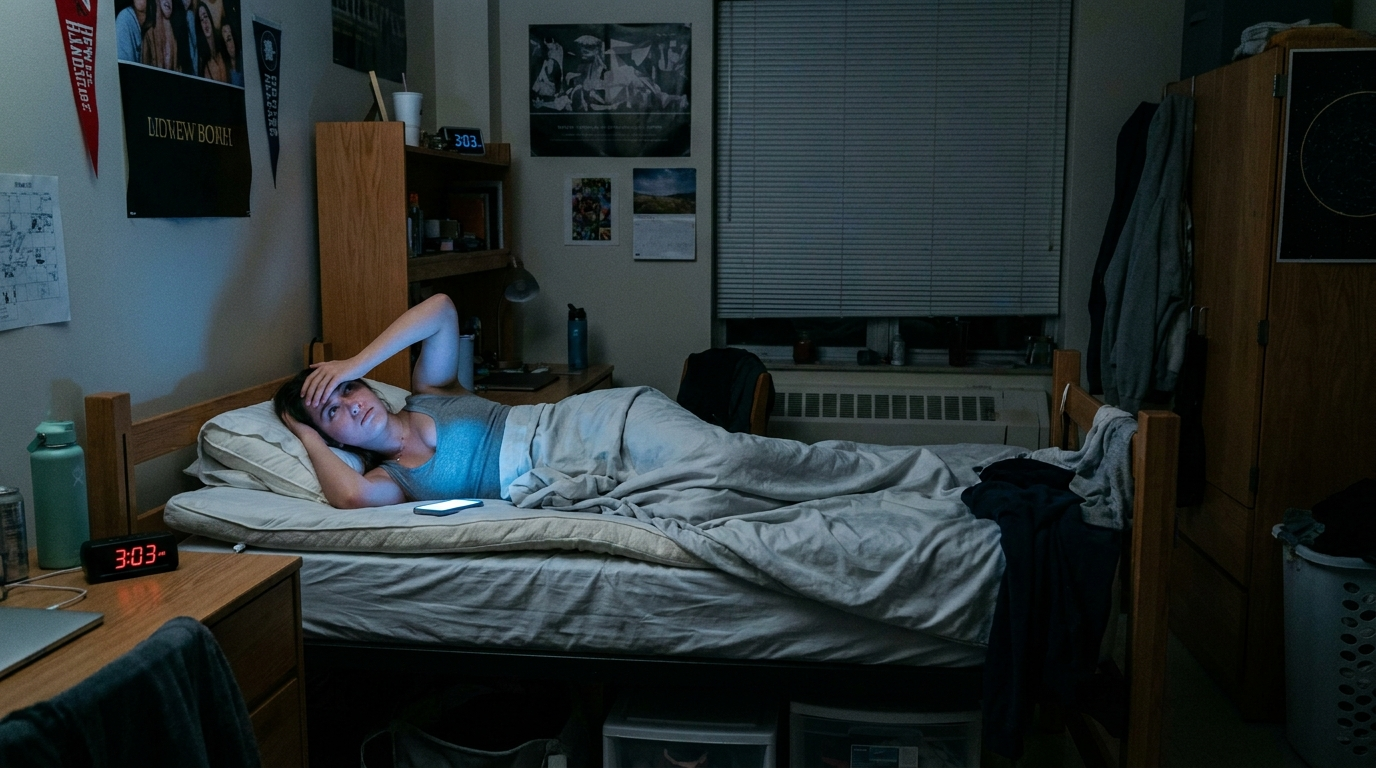
You're Not Imagining It — Dorm Rooms Are Bad for Sleep
You went to bed at midnight. Reasonable. And yet, here you are at 3:17 AM, wide awake and staring at whatever strange poster your roommate put up. What gives?
Waking up in the middle of the night is annoying on its own. But in a dorm, it happens constantly — and there are real, fixable reasons why.
The Most Common Reasons You're Waking Up at Night in Your Dorm
1. Your Bed Is Physically Uncomfortable
Dorm mattresses are not known for their luxury. Most are thin, firm, and designed to survive a decade of college students — not to actually help anyone sleep well.
Add a mattress topper into the mix, and you've introduced a new problem: it shifts. You fall asleep in a comfortable position, then wake up an hour later because your topper has drifted and there's a weird ridge pressing into your lower back.
A shifting topper causes more sleep disruption than most students realize — not through dramatic wake-ups, but through small, repeated micro-arousals that chip away at your sleep quality all night.
If your topper moves constantly, Bedly Straps are worth a look. They wrap your mattress, topper, and fitted sheet together so everything stays exactly where you put it — from lights-out to alarm.
2. Temperature Swings
Dorm HVAC systems are famously unpredictable. One night it's a sauna, the next it's a walk-in freezer. Your body temperature naturally drops as you sleep, and when your room's temperature fights against that process — or keeps swinging — your sleep cycles get interrupted.
Breathable bedding helps here more than you'd expect. Bamboo viscose fabric regulates temperature better than most synthetics, which means less tossing and turning when the thermostat does something weird at 2 AM.
3. Light Coming In (And Light Coming From Screens)
Dorm windows are either fine or completely useless at blocking outside light. Streetlights, parking lot floods, and emergency building lighting shine right through most standard curtains.
Combined with the glow from phones, monitors, and charging indicator lights around the room, you're often sleeping in a space that's much brighter than your brain wants it to be.
Things that actually help:
- A sleep mask — spend $10, thank yourself for months
- Blackout curtains if your building allows them
- Phone screen-down and on Do Not Disturb before bed
- Covering indicator lights on monitors, routers, and chargers with a small piece of tape
4. Your Roommate's Schedule
Your roommate coming in at midnight. Or 2 AM. Or setting an alarm at 6:30 for a class you don't have. This is the dorm sleep problem nobody warns you about during orientation.
You can't control what your roommate does, but you can control how you respond. White noise machines, earplugs, or even a fan on low can buffer a surprising amount of nighttime disturbance. A calm conversation about schedules early in the semester also goes further than most people expect.
5. Stress and Unfinished Mental Loops
College introduces a specific kind of mental noise that peaks right at bedtime. You remember the assignment you haven't started. The email you forgot to send. The quiz you could have studied more for.
This is rumination, and it's extremely effective at keeping you awake. A simple fix: spend five minutes before bed writing down everything you need to do tomorrow. Getting it out of your head and onto paper (or a notes app) reduces the mental spinning that wakes you up at 3 AM.
What Good Dorm Sleep Actually Looks Like
You're not going to get a perfect night's sleep every night in a dorm. That's realistic. But most students can significantly improve their sleep quality by addressing two or three of the issues above.
The most impactful changes to make:
- Fix your physical sleep setup first — mattress topper stability, sheets, temperature
- Control light and sound in your room as much as you can
- Build a consistent bedtime, even in a dorm setting — your body responds to routine
- Give your phone a break 20–30 minutes before bed
It won't be perfect. But 3 AM staring sessions should get a lot less frequent.
FAQ: Waking Up at Night in a Dorm
Is it normal to wake up multiple times a night in a dorm?
Very common, unfortunately. Dorm environments have a lot going against good sleep — noise, light, uncomfortable mattresses, irregular schedules. If you're waking up often, it's much more likely to be an environment issue than a personal sleep problem.
Can a mattress topper actually make waking up worse?
Yes, if it shifts around. An unstable topper creates uncomfortable sleep positions that pull you out of deeper sleep stages. Securing it with straps — like Bedly Straps — removes that variable entirely.
Does light really affect sleep that much in a dorm?
It does. Even low-level light exposure can interfere with melatonin production and make it harder to stay asleep once you've woken up. A sleep mask is one of the cheapest, most effective fixes in any dorm room.
What if my roommate keeps waking me up at night?
Start with a direct but friendly conversation — most roommates will adjust small things if asked early in the semester. Layer that with earplugs or a white noise machine for the nights it doesn't go perfectly. If it's a persistent problem, your RA can help mediate.
How long does it take to adjust to sleeping in a new dorm?
Most students find a rhythm within two to four weeks. If it's been longer than that and you're still waking up regularly, something physical in your environment is likely the cause — start there before assuming it's a sleep disorder.
Dorm Sleep Takeaway
Waking up at night in a dorm isn't bad luck — it's almost always caused by something specific in your environment. A shifting mattress topper, hall light seeping under the door, the HVAC cycling on at 3 AM. These are fixable problems. Start with the most obvious one, make a change, and see what happens. Better dorm sleep is less about perfect conditions and more about removing the most annoying obstacles, one at a time.